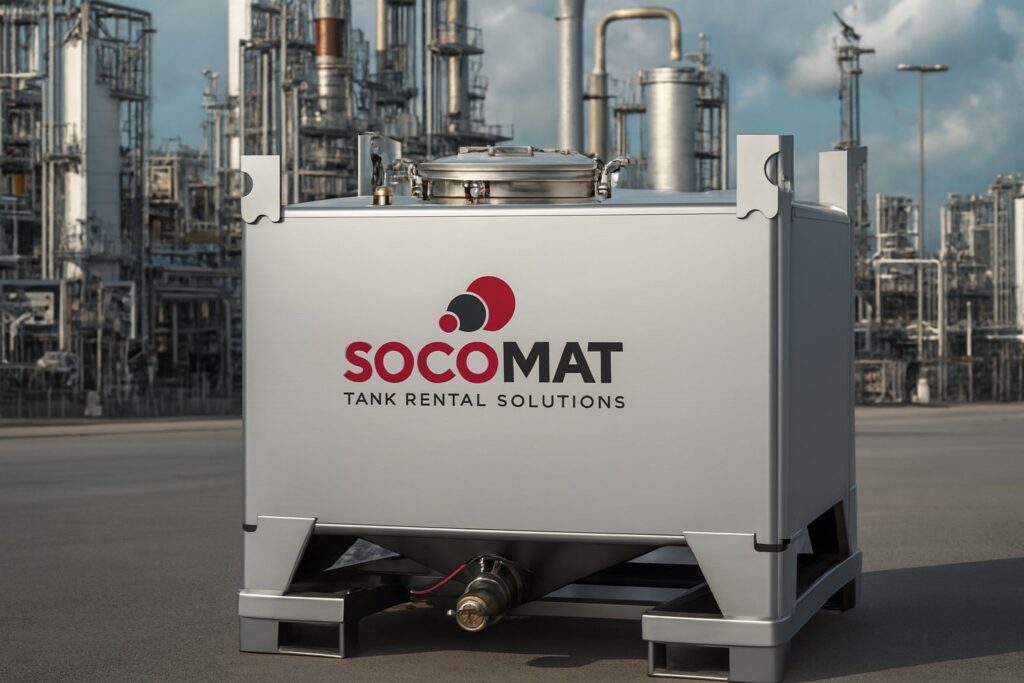
In industrial environments where safety, hygiene, and durability are non-negotiable, the stainless steel IBC (Intermediate Bulk Container) stands out as a benchmark solution.
Robust, reusable, and built to last, stainless steel IBCs meet the strict requirements of the chemical, food processing, cosmetic, and pharmaceutical industries, where storage quality directly impacts overall performance.
What Is a Stainless Steel IBC?
A stainless steel IBC is an intermediate storage and transport container made from stainless steel. Unlike traditional plastic IBCs, it offers:
-
Superior mechanical strength
-
Greater compatibility with sensitive products
-
Significantly longer service life
It is particularly suited for storing:
-
Corrosive chemicals
-
Food-grade raw materials
-
Pharmaceutical components
-
Sensitive cosmetic substances
Key Advantages of Stainless Steel IBCs
1️⃣ Exceptional Resistance
Stainless steel provides excellent resistance to corrosion, temperature fluctuations, and mechanical impacts.
This ensures safe storage of aggressive or sensitive products, even in demanding industrial environments.
2️⃣ Optimal Hygiene
In the food, cosmetic, and pharmaceutical sectors, hygiene is critical.
Stainless steel:
-
Does not retain residues
-
Reduces cross-contamination risks
-
Simplifies quality control procedures
It complies with the most stringent sanitary standards.
3️⃣ Long Service Life
Unlike limited-use plastic containers, stainless steel IBCs are designed to withstand numerous usage cycles.
Result:
-
Fewer replacements
-
Reduced waste
-
Lower total cost of ownership over time
4️⃣ Simplified Cleaning
The smooth surface of stainless steel allows:
-
Quick cleaning
-
Effective disinfection
-
Faster turnaround
This optimizes logistics cycles and improves overall productivity.
5️⃣ Enhanced Safety
Stainless steel IBCs are engineered to ensure:
-
Excellent stability
-
Reliable sealing
-
Resistance to internal pressure
They guarantee safe transport and storage, even for hazardous products.
Stainless Steel IBCs: A Sustainable and Responsible Choice
🌱 As companies strengthen their CSR commitments, stainless steel IBCs represent a sustainable solution:
-
100% reusable
-
Fully recyclable at end of life
-
Significant reduction in industrial waste
-
Lower long-term resource consumption
Stainless steel provides a responsible alternative, perfectly aligned with industrial environmental strategies.
Why Integrate Stainless Steel IBCs into Your Logistics Strategy?
Adopting stainless steel IBCs means:
-
Securing your industrial flows
-
Ensuring regulatory compliance
-
Optimizing long-term costs
-
Improving environmental performance
-
Strengthening supply chain reliability
In industries where even minor failures can have major consequences, container choice becomes a strategic decision.
FAQ – Stainless Steel IBCs
What is a stainless steel IBC?
An intermediate stainless steel container designed for storing and transporting liquid or semi-liquid products.
Which industries use stainless steel IBCs?
Chemical, food processing, pharmaceutical, cosmetic, and energy industries.
Are stainless steel IBCs more expensive than plastic IBCs?
Initially, yes. However, their durability and reusability significantly reduce the overall cost over time.
Is stainless steel suitable for corrosive products?
Yes, stainless steel offers excellent corrosion resistance.
Are stainless steel IBCs recyclable?
Yes, stainless steel is fully recyclable, making it a sustainable solution.
Socomat – Your Partner for Stainless Steel IBC Solutions
At Socomat, we support industrial companies in optimizing their storage and logistics through robust, safe, and durable stainless steel IBC solutions.
Our expertise enables us to guide you toward the equipment best suited to your technical, regulatory, and operational constraints.