THE SOCOMAT GUIDE
SBC tank: definition, uses and differences from an ISO tank container

Choosing between an SBC tank and an ISO tank container starts with your batch size, product and delivery process. This guide explains the differences and the questions to answer before requesting a rental quotation.
What is an SBC tank?
SBC stands for Small Bulk Container. The term “SBC tank” describes a compact bulk container used for liquid handling, transport or storage, subject to the suitability of the selected equipment. Socomat’s Small Bulk Containers range offers capacities from 500 to 2,500 litres, with steel or stainless steel bodies and lining options depending on the configuration.
When should you consider a Small Bulk Container?
Consider an SBC when your operation needs to keep batches separate or deliver quantities matched to individual customers, production campaigns or receiving points. Typical project scenarios to assess include:
- Batch deliveries: allocating a separate container to each destination or formulation.
- Production trials: assessing a container format around a limited initial requirement.
- Temporary storage: planning a buffer between delivery and use, with suitable site arrangements.
- Restricted receiving capacity: matching each delivery to what the customer can actually unload and accommodate.
For chemical, food, cosmetic or pharmaceutical applications, specify the product and cleanliness requirements at the outset. A sector name alone does not establish that a particular tank is suitable.
SBC vs ISO tank container: the main differences
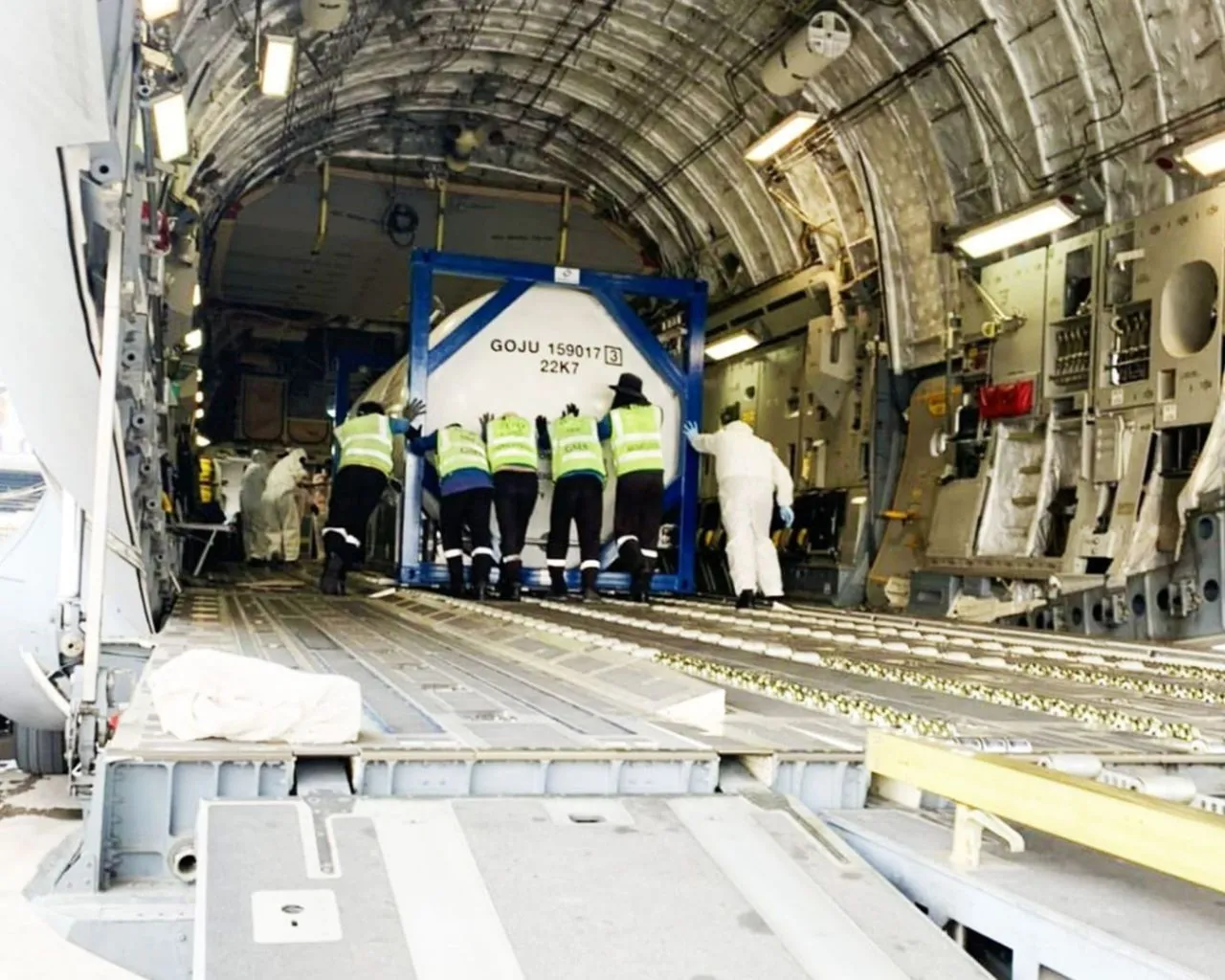
For comparison, Socomat’s 20-foot T11, T14, T20 and T22 ISO tank range lists capacities of 14,500 to 26,000 litres for liquid transport and storage. The capacity figures below refer to these Socomat ranges.
| Criterion | SBC | ISO tank container |
|---|---|---|
| Listed capacity | 500–2,500 L | 14,500–26,000 L |
| Project to assess | Separate, smaller batches | A consolidated bulk flow |
| Receiving process | Plan handling for each unit | Plan access and unloading for the larger unit |
| Cost comparison | Include the number of units and handling steps | Include transport, unloading and the return cycle |
Example: for a 1,000-litre batch, explore an SBC configuration first. For a recurring 20,000-litre delivery to one site, assess an ISO tank option. These are starting points for a technical assessment, rather than automatic equipment recommendations.
How to choose the right tank capacity
- Define the usable quantity. State the volume per batch and the required delivery frequency. Nominal tank capacity is not automatically the authorised filling volume.
- Describe the liquid. Provide the safety data sheet where applicable, density, viscosity and operating temperature. Identify material compatibility and cleaning requirements.
- Check the full route. Specify origin, destination, transport modes and any dangerous-goods classification so the appropriate equipment can be assessed.
- Confirm site handling. Explain access restrictions, lifting facilities, connections and unloading arrangements at both ends.
- Compare the complete rental cycle. Include hire duration, transport, cleaning, return logistics and time between uses, rather than comparing capacity alone.
Discuss your SBC or ISO tank project with Socomat
Socomat offers short-, medium- and long-term tank rental solutions. To help us assess your requirement, send your product, batch volume, route, required dates and handling constraints. Add your safety data sheet where relevant and tell us whether the need is one-off or recurring.
Explore Small Bulk Containers Request a rental quotation
Frequently asked questions
What does SBC mean?
SBC means Small Bulk Container. When searching for an “SBC tank”, specify the liquid and intended operation to identify the relevant configuration.
Is an SBC always more economical than an ISO tank?
The answer depends on batch size, the number of containers, transport, cleaning and handling. Compare quotations for the same delivery requirement and rental period.
Can I use any SBC for a hazardous liquid?
No. Suitability must be assessed for the specific substance, equipment configuration and transport conditions. Share the product documentation before selecting a unit.